Why Is Your School Getting Enquiries but Not Enough Admissions? 7 Real Reasons Parents Aren't Enrolling

Educationist, School Growth Consultant & Digital Marketing Strategist
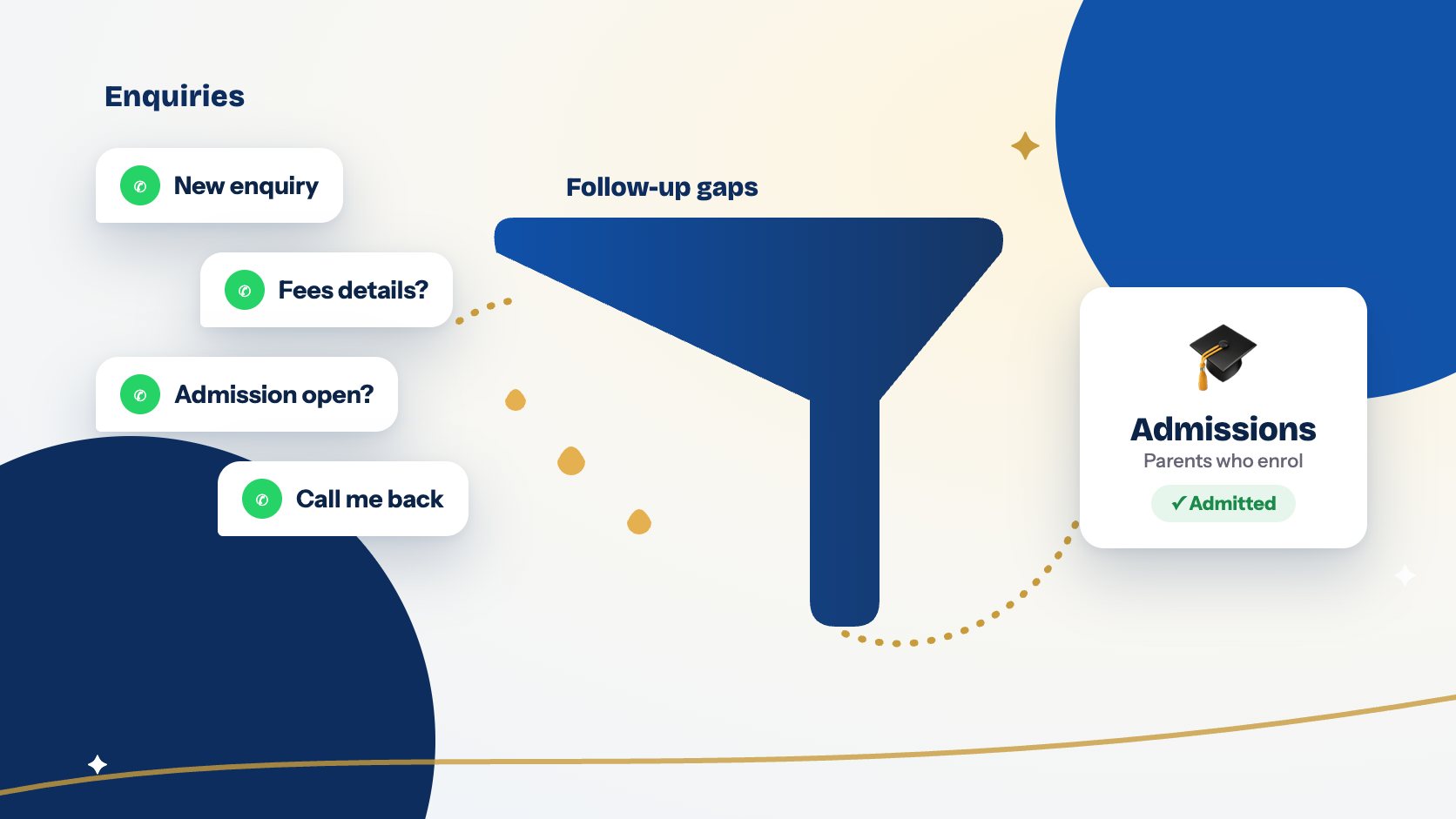
Your front office phone won't stop ringing. Your Instagram DMs are full of "please share fee structure" messages. Your enquiry register for this admission season is longer than last year's.
And yet, when you check actual admissions? The number is flat. Maybe even lower.
If you're a school owner or principal in India right now, you know this feeling well. It's confusing, honestly. More interest is supposed to mean more enrolments. That's how it's worked for years. So why isn't it working now?
Here's the uncomfortable truth: getting enquiries has become easy. Converting them hasn't. Every school in your area is running Google Ads, boosting Instagram reels, and showing up on Justdial. Parents are enquiring at five schools at once, comparing quietly, and quite often going with whichever school made them feel most confident, not whichever school called first.
So if your enquiry numbers look great on paper but your admission register tells a different story, you're not alone. Let's walk through the seven reasons this is happening, and, more importantly, what you can actually do about each one.
1. You're Responding Too Slowly to School Enquiries
Here's something every school leader should sit up for: parents who don't hear back quickly are far more likely to have already spoken to another school. In a competitive admission market, speed isn't a nice-to-have. It's the difference between "yes, we're interested" and "we already spoke to another school."
Think about how a parent enquires today. Often it's 9 pm, scrolling schools on their phone after putting the kids to bed. If your school's response comes two days later, in the form of a generic WhatsApp broadcast, you've already lost the moment.
What to do instead:
- Assign someone (not "whoever's free") to respond to every enquiry within a fixed window: same day, ideally within a couple of hours
- Set up an auto-acknowledgment so parents know they've been heard, even before a human replies
- Track response time as a KPI, not an afterthought
2. Your Follow-Up System Doesn't Actually Exist
A lot of schools have the first response nailed down. It's the follow-up where things fall apart. One call, maybe one WhatsApp message, and then... silence. Meanwhile, the parent is fielding calls from three other schools that are following up consistently.
Here's the thing about school admissions: it's rarely a one-conversation decision. Parents need to talk to their spouse, compare fee structures, maybe visit two or three campuses before deciding. If your school disappears from the conversation after enquiry number one, you're simply not in the running anymore.
What actually works:
| Follow-Up Stage | Timing | Channel |
|---|---|---|
| Acknowledgment | Same day | WhatsApp / Call |
| First real conversation | Within 24 hours | Phone call |
| Value-add follow-up (brochure, video, testimonials) | Day 3-4 | WhatsApp / Email |
| Personal check-in | Day 7 | Call |
| Final nudge before deadline | Closer to admission cutoff | Call / SMS |
A structured, multi-touch sequence like this beats a single enthusiastic phone call every time.
3. Your Admission Counsellors Are Trained to Inform, Not to Build Confidence
There's a real difference between a counsellor who answers questions and one who builds confidence. Most schools have the first kind. Ask about fees, they tell you the fees. Ask about facilities, they list the facilities. It's accurate. It's also forgettable.
Parents aren't just collecting information when they enquire. They're trying to answer one anxious question: "Will my child be safe, happy, and genuinely better off here?" A counsellor who can speak to that, with warmth and specifics (not scripted lines), converts enquiries. One who recites the prospectus doesn't.
Fixes that help immediately:
- Train counsellors to share real stories of student progress, not just numbers
- Practise handling common objections: fees, distance, curriculum doubts
- Role-play the first call so it feels like a conversation, not a Q&A session
4. Parents Lose Interest Right After the School Tour
This one stings because it happens after you've done all the hard work of getting them onto campus. The tour goes fine. Everyone smiles. And then, nothing. No application, no call back, no closure.
Usually, it's not that the tour went badly. It's that nothing memorable happened during it, and no one gave the parent a reason to act now rather than "we'll think about it."
Simple tour fixes:
- End every tour with a clear next step ("here's what happens if you'd like to apply this week")
- Introduce parents to a teacher or student during the visit. A real human interaction sticks far more than a building walkthrough
- Follow up within 24 hours of the tour, while the experience is still fresh
5. Your School Website Is Quietly Pushing Parents Away
Here's something a lot of school leaders underestimate: your website is often the second or third touchpoint a parent has with your school, right after the ad they clicked or a Google search. If it's slow, cluttered, or the enquiry form is buried three clicks deep, you're losing parents before your counsellor ever gets the chance to speak to them.
Common culprits:
- Fee structure or curriculum details nowhere to be found
- An enquiry form that's long, confusing, or doesn't work properly on mobile
- No clear sense of why this school, versus the five others they've also opened in browser tabs
Your website doesn't need to be flashy. It needs to be fast, clear, and built to make enquiring effortless.
6. There's No Real Handoff Between Marketing and Admissions
This is a quieter problem, but a common one. Your marketing team (or agency) is generating leads through Google Ads, Instagram and referral campaigns. But by the time those leads land with your admissions team, there's no context, no urgency, no sense of lead quality. Every enquiry gets treated the same, whether it's a parent who filled a form on impulse or one who's actively comparing schools this week.
What helps:
- Tag leads by source and intent (a parent who called after a Google Ad is often more ready to act than one who filled a passive form)
- Give admissions teams basic context on each lead before they call: which ad, which page, what they asked about
- Set up a simple CRM, or even a well-maintained spreadsheet, so no enquiry falls through the cracks
7. You're Not Tracking the Numbers That Actually Matter
Most schools track how many enquiries they got this month. Very few track the enquiry-to-admission conversion rate, and that's the number that tells you whether your funnel is healthy.
If you're getting 200 enquiries and converting 15, that's a conversion rate worth investigating. If a similar school nearby converts 40 from the same number of enquiries, the gap isn't about lead volume. It's about everything that happens after the enquiry.
A few numbers worth tracking every month:
- Enquiry-to-tour conversion rate
- Tour-to-application conversion rate
- Application-to-enrolment conversion rate
- Average response time to new enquiries
Once you can see where families are dropping off, you know exactly which of the six reasons above to fix first.
Bringing It All Together
None of these seven reasons are about your school not being good enough. In most cases, it's genuinely good schools losing admissions to slow response times, inconsistent follow-up, or a website that doesn't do justice to what happens inside the classroom.
The good news? Every one of these is fixable, usually without spending a single extra rupee on ads. It's about tightening what happens after the enquiry comes in, not generating more of them.
If your enquiry numbers are healthy but your admission list isn't growing the way it should, start with one of the seven areas above this week and track what changes. And if you'd like a second pair of eyes on your admission funnel, get in touch with Schoofa Aura and we'll look at it together.
Which of these seven is hitting your school hardest right now? That's usually the best place to start.
Frequently Asked Questions
Q1.How long should a school take to respond to a new enquiry?
Ideally within a couple of hours, and never later than the same day. Parents often enquire at several schools at once, so the school that replies first and replies well usually gets the next conversation.
Q2.What is a good enquiry-to-admission conversion rate for schools?
It varies by school type, location and season, but if you are converting less than 15-20% of enquiries into admissions, there is real room to improve your funnel. Track enquiry-to-tour, tour-to-application and application-to-enrolment separately to see where families drop off.
Q3.How many follow-up attempts should we make with each enquiry?
At least 4-5 touchpoints across different channels (call, WhatsApp, email) before you consider a lead cold. Spread them over a week or two instead of sending everything on day one.
Q4.What role does the school website play in converting enquiries to admissions?
A bigger one than most schools realise. It is often the deciding factor in whether a parent picks up the phone to enquire at all, or drops off before that. A fast, clear, mobile-friendly site with an easy enquiry form helps every other part of your admission funnel.
Anjum Farhana is an Educationist, School Growth Consultant and Digital Marketing Strategist with over 20 years of experience in education and school leadership. She helps educational institutions and businesses strengthen their online presence through website development, SEO, Google Ads, Meta Ads, social media marketing, branding and business growth strategies.